01
Sullair Logistics Platform
Sullair needed to digitize its heavy machinery logistics process—centralizing information, reducing errors, and improving coordination between internal areas and external carriers.
Client:
Sullair Argentina
Role:
UX/UI Designer
Team:
PM, Developers, Business, IT, Administration
Duration:
22 Weeks
Context
Sullair managed logistics through spreadsheets, emails, and disconnected systems. This led to delays, lack of visibility, and frequent billing errors.
The main challenge was to organize complex information, digitize key flows, and enable seamless collaboration with transport partners.
KPIs & Goals
Reduce rework (target: -40%).
Shorten time per order (-30%).
Fewer support tickets due to data entry errors.
Process
Over four weeks, we conducted a collaborative discovery process to map workflows, identify pain points, and align multiple departments under one product vision
Workshops & Interviews
We mapped current processes and restrictions with the Purchasing, IT, Tax, Billing, and Sales teams.
Research Canvas
We used an Atomic UX Research Canvas to structure facts, insights, and opportunities.
Facts: Manual processes, misaligned communication, duplicated data.
Insights: Need for traceability and workflow automation.
Opportunities: Centralize information, standardize request flows.
Information Architecture
We defined a modular structure connecting logistics, orders, transportation, and administration.
MVP Definition
We prioritized features by impact and dependency, creating a four-week roadmap to deliver quick, measurable value.
Solution
Unified, traceable workflows between logistics and administration.
Reduced manual effort and fewer errors in requests and closures.
External collaboration: carriers now interact directly within the digital flow.
Scalable foundation ready to support additional modules and features.
Outcome
A connected, scalable platform built for clarity and collaboration.
The final solution unifies logistics operations, administrative management, and communicator channels with transporters in a single digital ecosystem — enabling faster decisions and fewer manual handoffs.
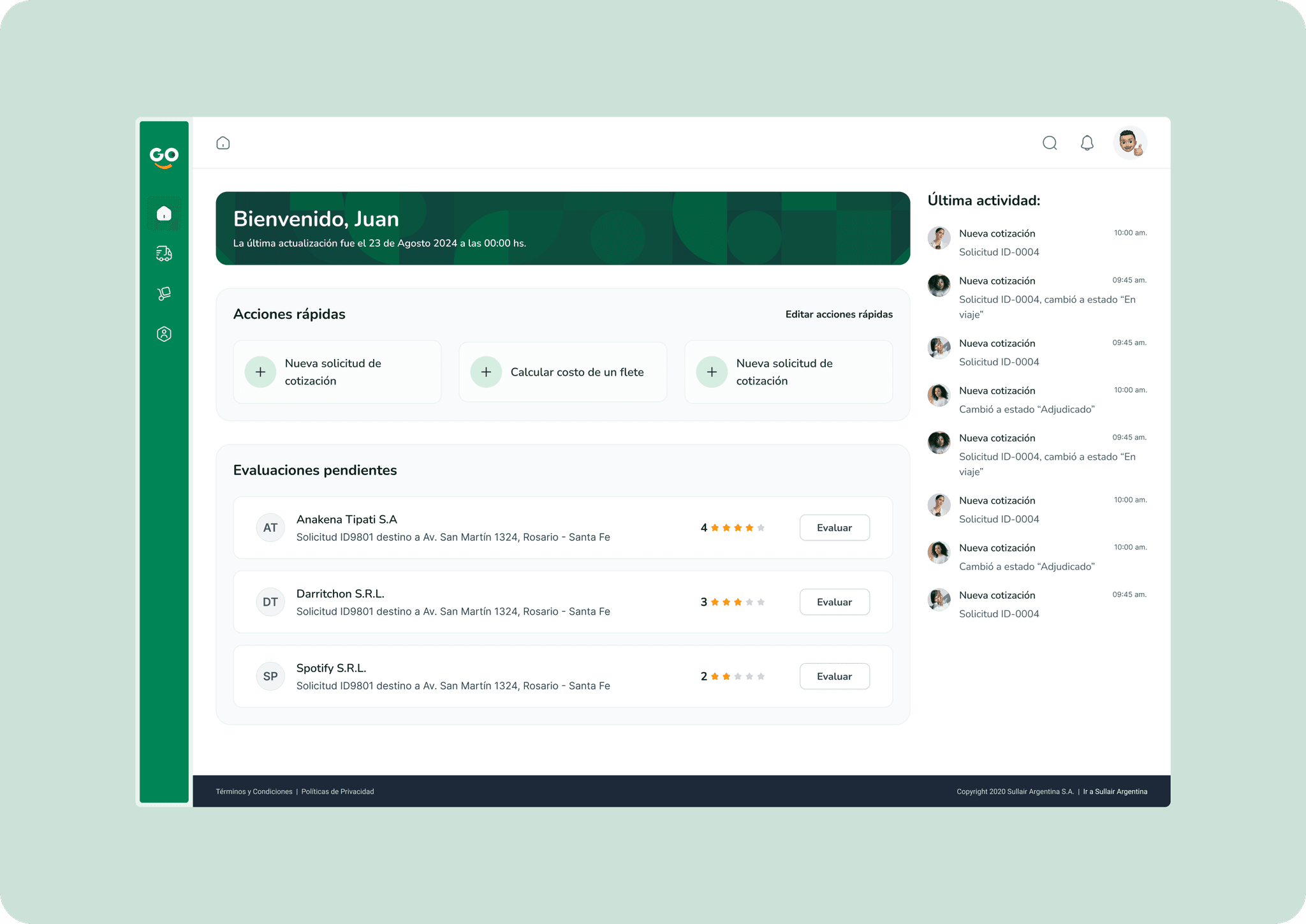
Welcome & operational control: quick actions to create quotes, pending evaluations list and an activity feed to prioritise the day’s tasks.
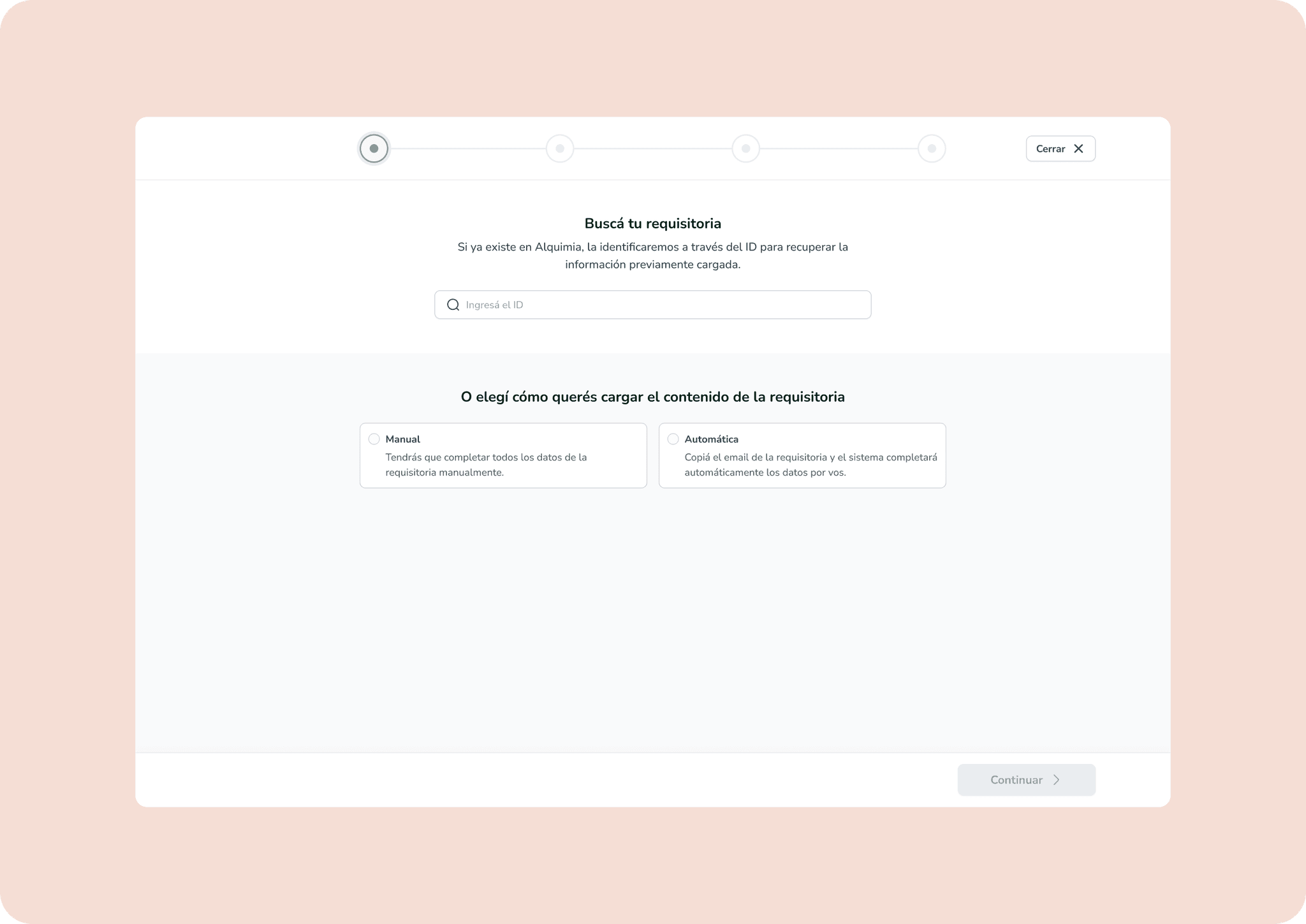
Upload interface designed to reduce friction: search previous requisitions by ID, or pick manual vs automatic loading (auto-fill from Alquimia). The goal: minimize re-entry and speed up publishing so suppliers receive and accept the request fast.
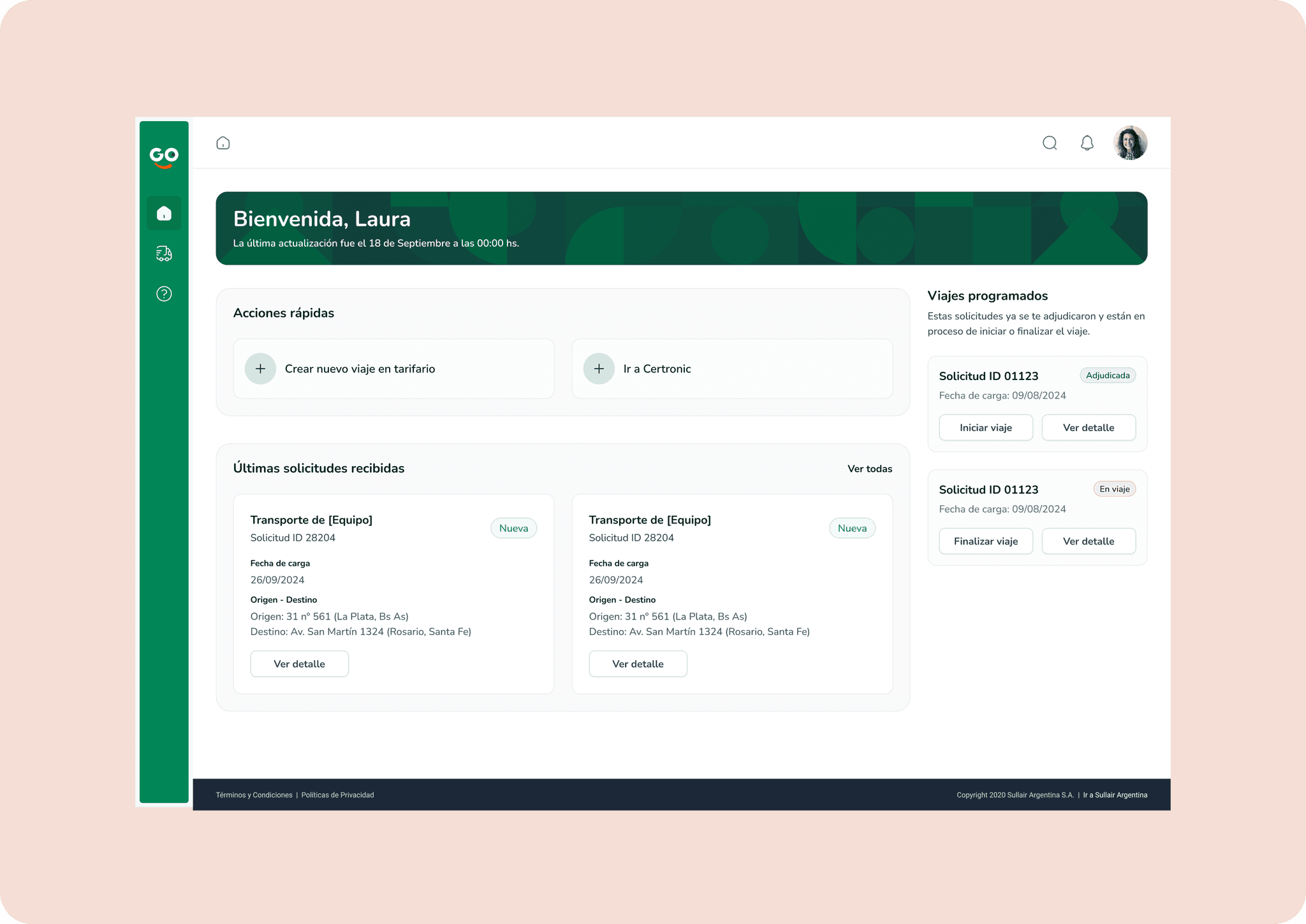
Main view for the supplier user that prioritises daily operations: buttons to create trips, a list of the latest received requests (with status and date) and a sidebar with awarded trips to start or finish. Designed to reduce response times and operational errors.
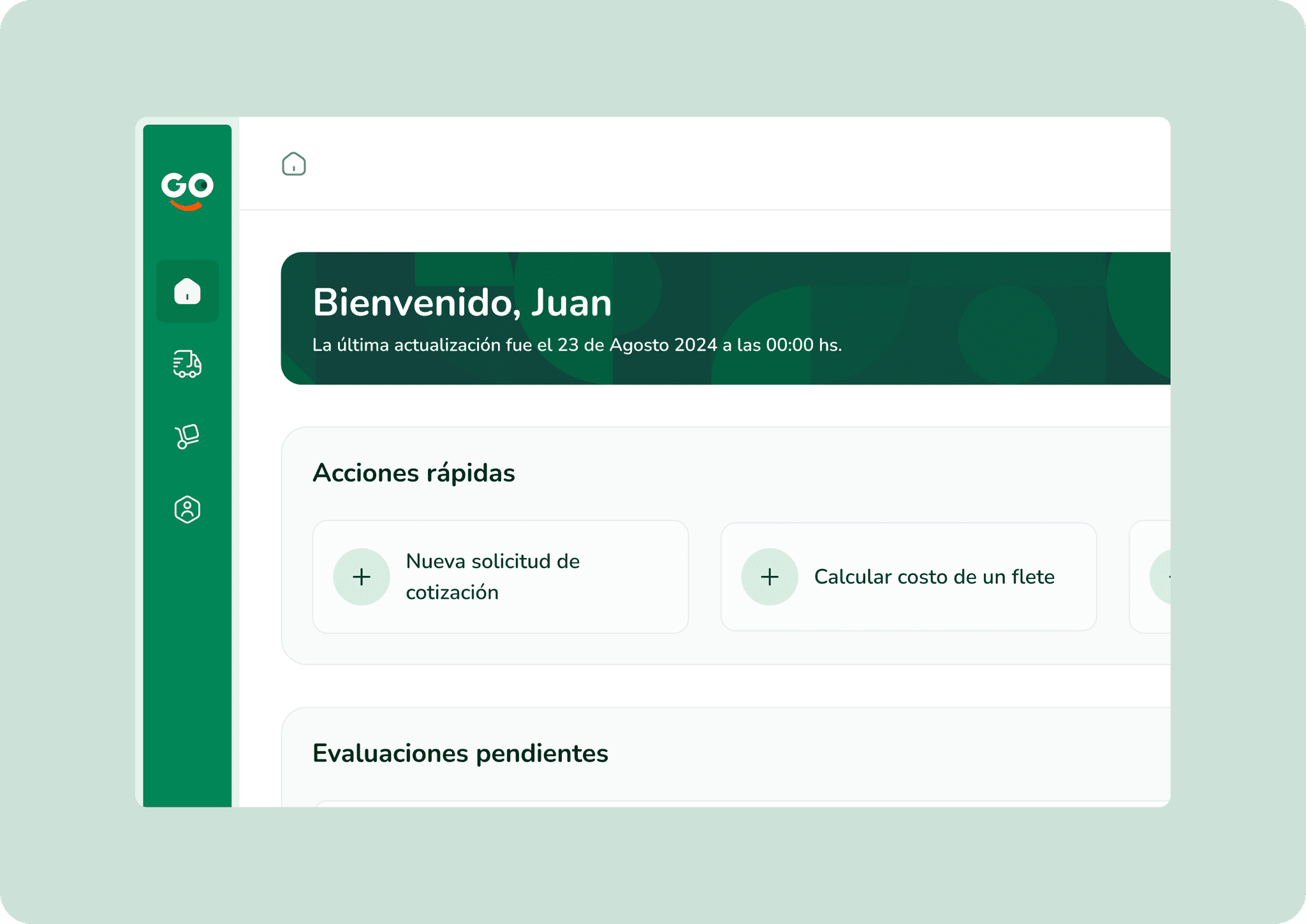
The sidebar is designed as a modular hub: add-on modules (analytics, integrations, billing, etc.) can be introduced without disrupting the core user experience.
Conclusion / What I Learned
This project deepened my understanding of designing products that connect internal operations with external actors.
I learned to:
Translate complex business rules into clear, auditable workflows.
Prioritize MVPs based on real impact and cross-team dependencies.
Design scalable solutions that foster collaboration across departments.